





Note
-
Registration for IFATCA APRM 2026 in Tokyo is now open! We kindly ask participants to complete their registration by September 19, 2026, whenever possible.
-
The APRM 2026 schedule has been updated. Please check the latest programme.
-
Joint Session with IFALPA(https://alpajapan.org/aprm2026/)
-
We are delighted to announce the official launch of the IFATCA APRM 2026 in Tokyo website.
Schedule
October 2026
-
Registration
-
Opening Remarks & Ceremony
-
Guest RemarksKeynote Speech by ICAO Representative
-
Coffee BreakIFATCA/IFALPA Joint SessionPanel Discussion
-
Lunch
-
Japanese Traditional Arts Performance
Keynote Speech -
Coffee Break
-
Sponsor Presentations
-
IFATCA Basics
-
IFATCA Industry Partners Presentation
-
Day 1 Wrap Up
-
Welcome party
-
Registration
-
Roll CallMember Associations’ Report Part1
-
Coffee Break
-
Member Associations’ Report Part2
-
Lunch
-
CISM(Critical Incident Stress Management) TBDIFATCA Session
-
Coffee Break
-
Member Associations’ Report Part3
-
Day 2 Wrap Up
-
Gala dinner
-
Registration
-
Roll CallIFATCA Speak English ProgramIFATCA 2030+IFATCA EDITF
-
Coffee Break
-
IFATCA ASP EVP ElectionAPRM2028 Presentation & ElectionAPRM2027 Information Presentation
-
Closing Ceremony
Schedule as of July 2026. Subject to change.
Event venue

Ochanomizu Sola City 2F,
4-6 Kanda Surugadai, Chiyoda-ku,
TOKYO
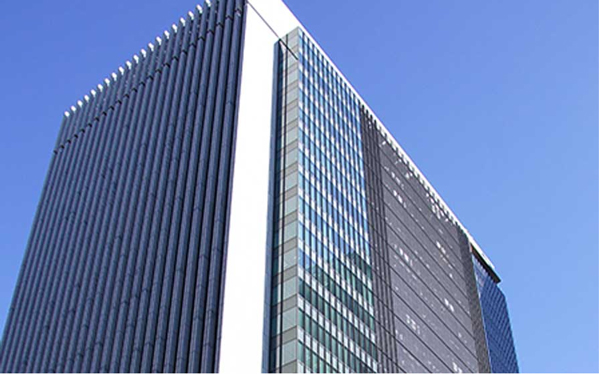
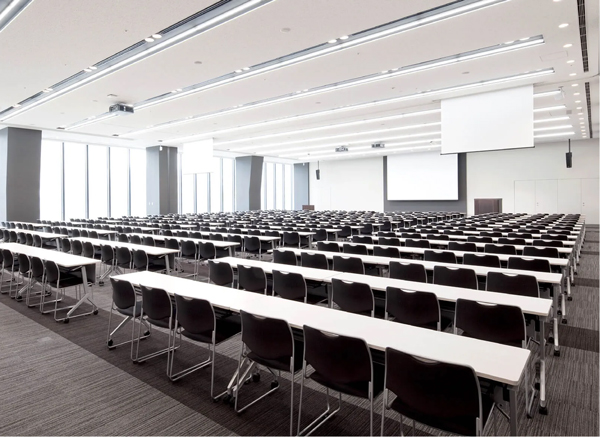

The Ochanomizu area is home to many famous places and historical landscapes from the Edo period.
4-6 Kanda Surugadai, Chiyoda-ku - the land on which Ochanomizu Sola City stands was once the site of Yanosuke Iwasaki's residence and the Mitsubishi company. Even now, more than 100 years later, the stone walls and brick retaining walls built at the time have been restored and preserved, and you can still see them in person.Why not trace the memories of the land that remain at Ochanomizu Sola City?


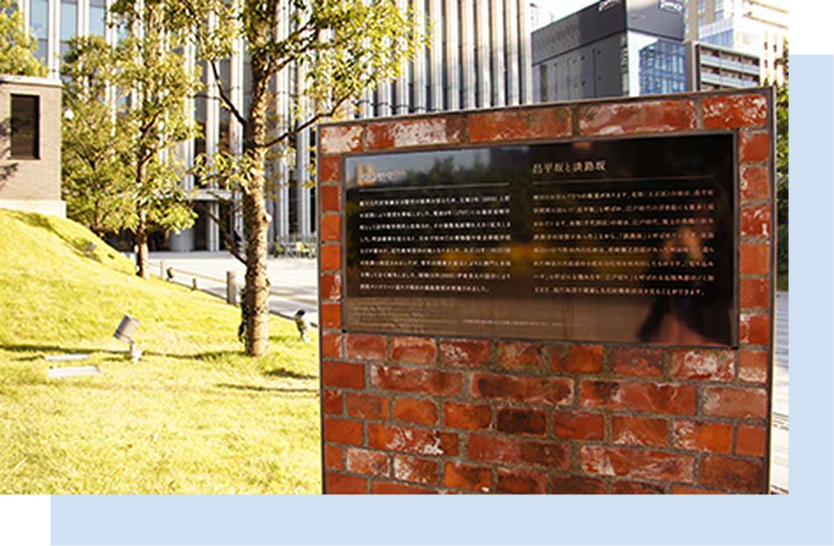
The brick retaining wall was built by reusing the retaining wall of Iwasaki Yanosuke's residence and Mitsubishi Company, which were located here. The brick retaining wall of Iwasaki's residence and Mitsubishi Company was constructed during the Meiji period, and the cherry blossom mark on the back of the brick indicates that it was manufactured at Kosuge Penal Colony. The bricks are not made using a mold, but are cut using iron wire, and each one is slightly different in size. The bricks are laid in a style known as "English bonding," in which rows of bricks are laid only on the long sides and rows of bricks are laid only on the short sides, alternating between two rows.


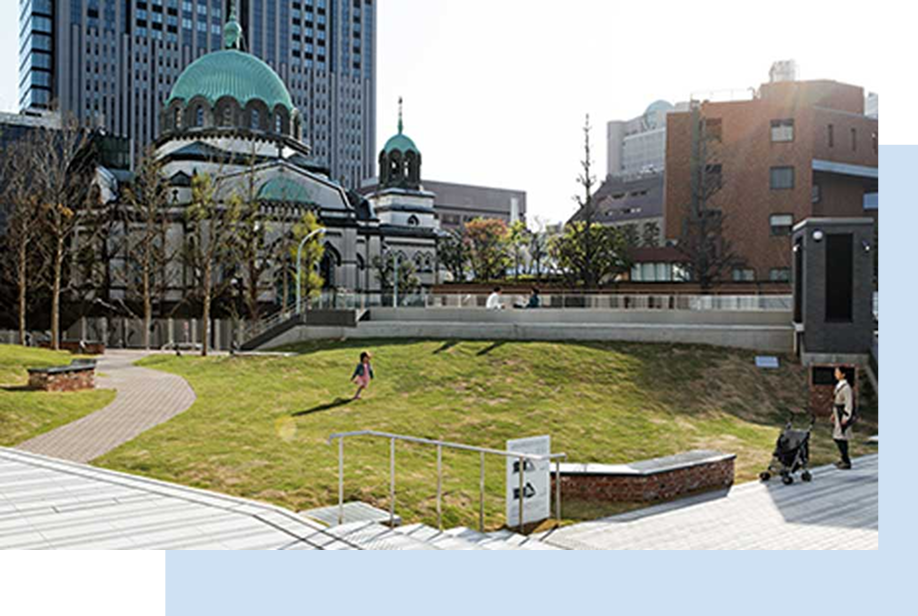
The southern end of the building facing Hongo-dori was called "Gunkanyama" in the early Showa era, and was a great playground for children. The triangular area that was created when the street was expanded, with its piled-up stone walls and their peak, looked just like a giant battleship to children. From the remains of the Iwasaki residence's basement, you can get a good view of Nikolai Cathedral opposite, and the place was apparently a popular sketching spot during art classes at elementary school. The stone walls and camphor trees at the tip of Gunkanyama have been left as they were in the past, and together with the historical information board made from recycled bricks from the Iwasaki residence's retaining wall and the benches in the square, they preserve the historic scenery of Kanda Surugadai.


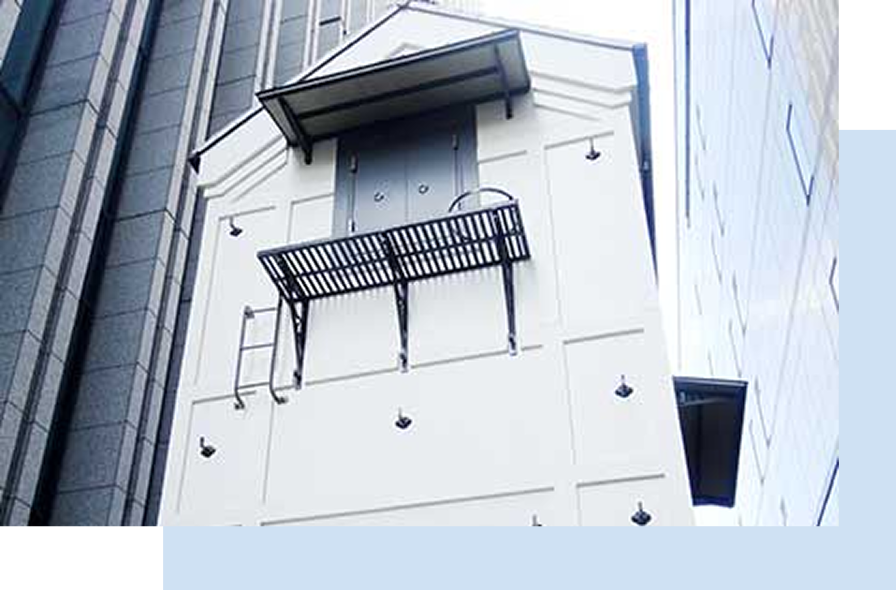
At the planned site for the Awajicho redevelopment project, there was a storehouse that was built in 1917 as a book storehouse and later became a popular art gallery.
It was originally scheduled to be demolished, but its cultural value and importance as a local resource was deemed high, so the materials inside were reused and it was moved and restored to the site. Currently, it is used as "Gallery Storehouse" and is a popular place for many people to display their artwork.
At the planned site for the Awajicho redevelopment project, there was a storehouse that was built in 1917 as a book storehouse and later became a popular art gallery.
It was originally scheduled to be demolished, but its cultural value and importance as a local resource was deemed high, so the materials inside were reused and it was moved and restored to the site. Currently, it is used as "Gallery Storehouse" and is a popular place for many people to display their artwork.
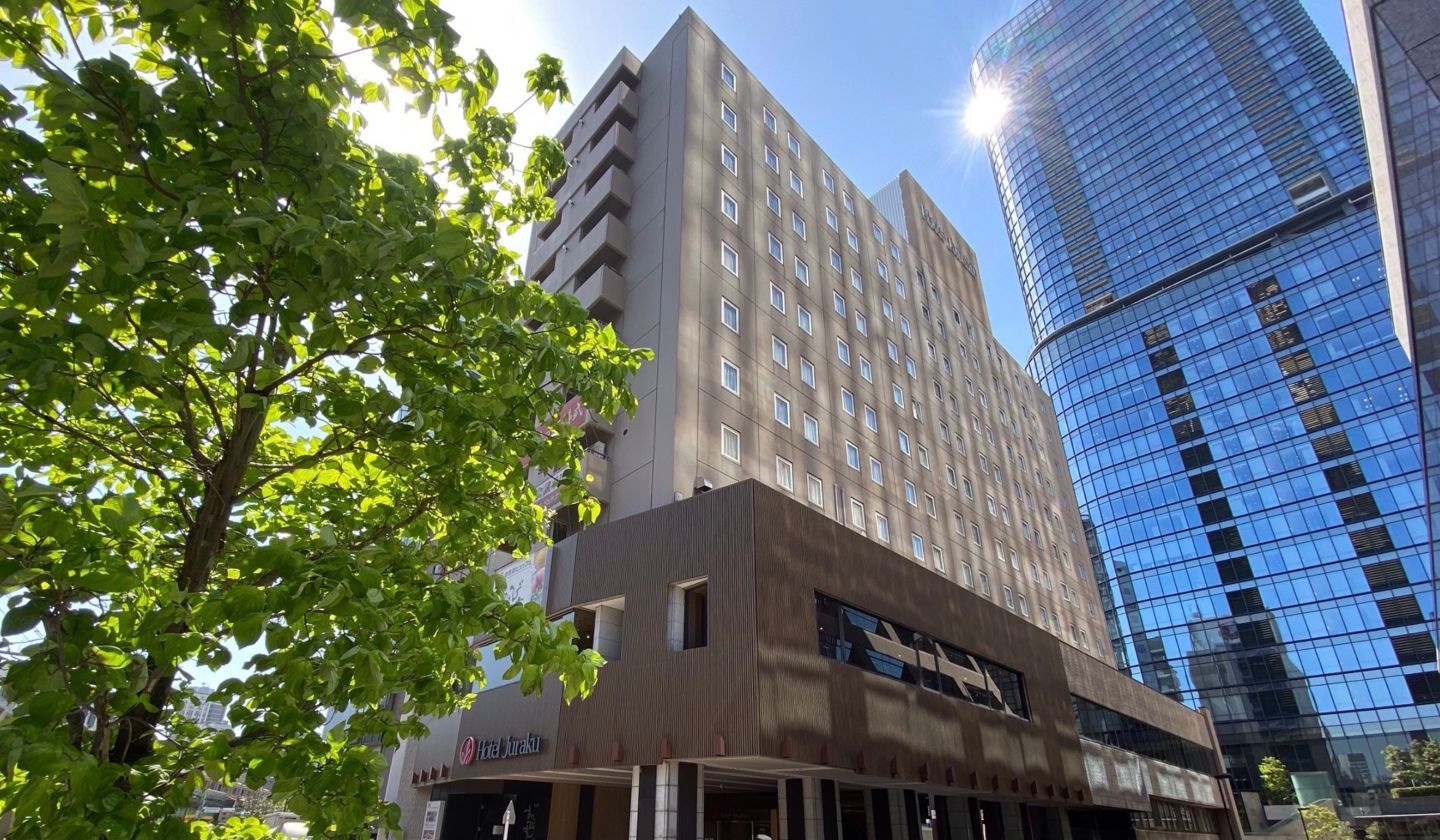
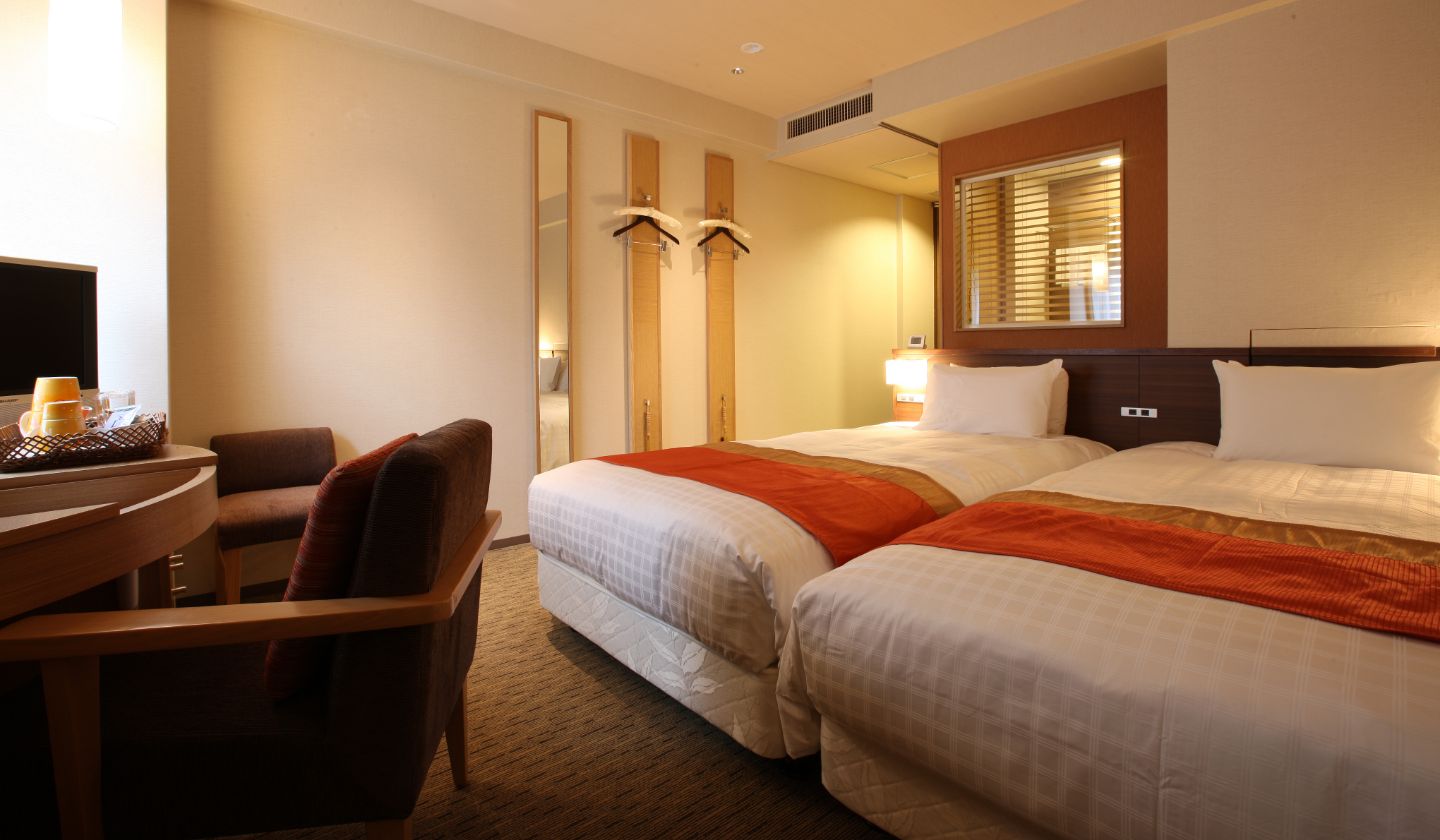
Accomodation



Sponsors
順不同


























Supported by Tokyo Convention & Visitors Bureau